

Sourcing Soft Luggage: Seven Checks Before You Place a PO
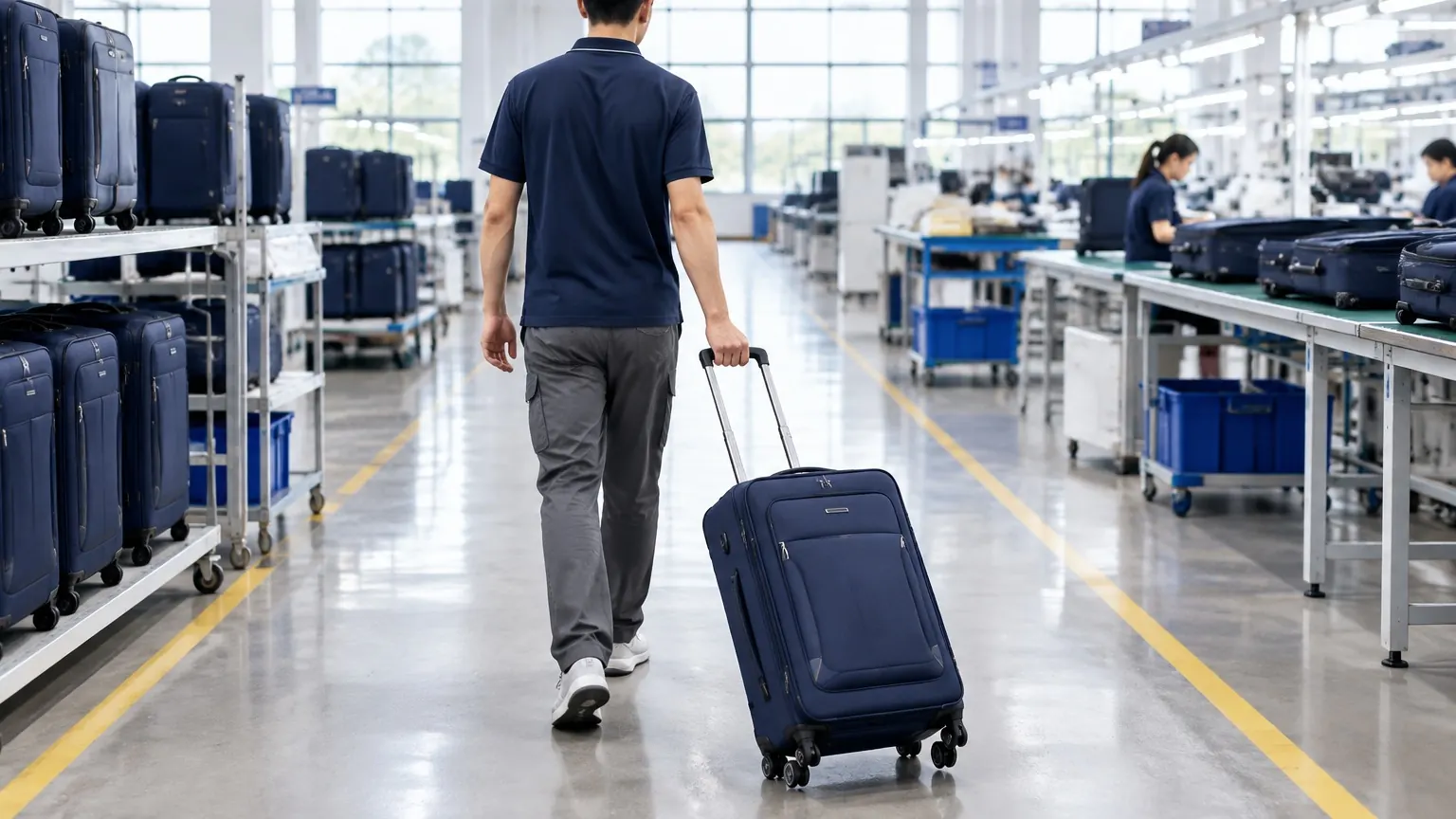
Most sourcing problems are decided long before production starts. They are decided in the sample room, in which spec nobody wrote down, and in the checks nobody asked for. These are the seven we go through with buyers before a purchase order is signed.
Start with the fabric, and ask for the actual spec rather than a description. Denier, weave, backing and coating all change the hand feel and the cost, and 600D polyester is not a substitute for 1680D twill no matter what the colour card says. Ask for a swatch cut from the bulk roll rather than from the sample room, hold it up to the light to see whether the backing is even, and keep that swatch as the reference for the inspection.
Then the trolley system. Aluminium tubes are lighter and stiffer than iron; wall thickness matters more than the label. Extend the handle fully, hold the case by the grip and shake it gently – a good system moves a few millimetres, not a centimetre. Check the locking notches at every height, and make sure the handle returns without a fight.
Wheels decide how the case feels in a shop and how it survives a carousel. Ask what the tyre compound is and what bearings sit inside the housing, then roll the case twenty metres across the factory floor and listen. Rattle means loose housings; a dragging wheel means a bearing that will fail in the field.
Stitching is where a cheap case gives itself away. Count the stitches per inch at the handle roots, the corners and around the wheel housings, look for bartacks at every stress point, and pull hard on the top handle with the case loaded. A single row of long stitches will open before the first trip is over.
Look at the zips and the lining next. The main compartment wants a heavier gauge than the front pocket, sliders should run without catching, and the pulls should be metal-cored rather than plated plastic. Inside, seams should be bound rather than raw, the lining should be anchored at the frame, and there should be no loose thread ends waiting to catch a zip.
Finally, approve a pre-production sample and write the spec into the order: fabric reference, trolley specification, wheel compound, stitch density, and the tests you expect – drop, rolling and handle oscillation. Agree the inspection level and the sampling plan in writing, with photographs of every accepted detail. A factory that can hold a written spec is a factory you can scale with.
Looking for a quote on this kind of product?
Contact the sales team